I Thought My Cat’s Microchip Could Find Her. I Was Wrong.
I learned something about my cat’s microchip this week that I really wish I’d known before I needed the information.
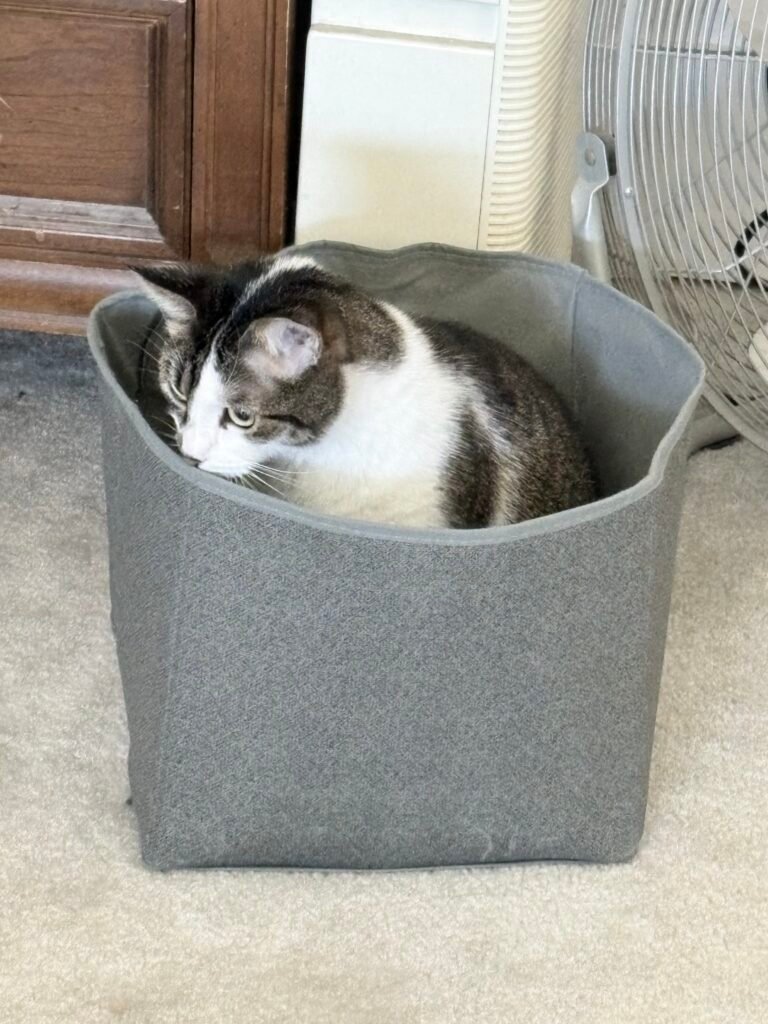
Rebel is an indoor cat. She doesn’t normally go outside, and our home is pretty much her entire world.
But after a recent trip to the veterinarian, Rebel had a few days where she wasn’t quite herself. She was eating and drinking, but she was spending a lot of time hiding.
Then one day, I couldn’t find her.
I searched everywhere.
Under the bed. Behind the couch. In the bathrooms. In the kids’ rooms. Her cat tree. Her window hammock. Every hiding place I could think of.
We even had someone coming in and out of the house that day, so I started worrying that somehow she might have gotten outside.
That’s when I called the vet.
“Does Rebel have a microchip?”
Yes, they told me.
Great.
Then I asked the question that, in hindsight, I probably should have known the answer to:
“Can I use the microchip to find her?”
No.
Wait. What?
The veterinarian explained that the microchip doesn’t show her location. If someone finds Rebel and takes her to a shelter or veterinary clinic, they can scan her microchip and use the identification number to find the registration information associated with it.
But nobody can look at a map and see where Rebel is hiding.
And that’s when I realized I had misunderstood what a pet microchip actually does.
What Does a Cat Microchip Actually Do?
A pet microchip is a tiny identification device, about the size of a grain of rice, that is implanted under the skin. It contains a unique identification number.
The microchip itself does not store your address, phone number, or medical records. Instead, the identification number is associated with information held by a microchip registry. When a veterinarian, shelter, or animal control facility scans the chip, they can use that number to identify the appropriate registry and, when the registration information is available, contact the pet’s owner.
So think of a microchip as a permanent ID card, not a tracking device.
It can help someone answer:
“Who does this cat belong to?”
It cannot answer:
“Where is this cat right now?”
Can a Microchip Track My Cat?
No.
This is probably one of the biggest misconceptions about pet microchips.
Microchips do not contain GPS technology and cannot transmit your cat’s location. A microchip has no power source and needs to be scanned by a compatible reader.
If you want to know where your cat is, you need a separate tracking device, such as a GPS tracker designed for cats.
That distinction is important because microchipping and tracking solve two completely different problems.
Microchip: Helps identify your cat if she is found.
GPS tracker: Helps you locate your cat.
Ideally, you don’t have to choose between them.
Then Why Should I Microchip My Cat?
Because even though a microchip can’t tell you where your cat is, it can help get her home once someone finds her.
And that’s a pretty big deal.
According to the American Animal Hospital Association, a study of more than 7,700 stray animals found that only 1.8% of cats without microchips were reunited with their owners, compared with 38.5% of microchipped cats.
That’s a substantial difference.
A microchip also has an advantage over a collar and ID tag: it can’t simply fall off.
That’s why organizations such as AAHA and the ASPCA recommend using a microchip along with visible identification rather than treating them as competing options.
A Microchip Is Only Helpful If Your Information Is Current
Here’s something that’s easy to overlook.
Getting your cat microchipped is only part of the job.
You also need to make sure the microchip is properly registered and that your contact information stays current.
Changed your phone number?
Moved?
Changed your email address?
Have a different emergency contact?
Update the information associated with your cat’s microchip.
AAHA notes that incorrect or missing owner information is a major reason microchipped pets aren’t successfully reunited with their families.
It’s worth asking your veterinarian which registry your cat’s chip is associated with and making sure the information is correct.
If you don’t know which registry has your cat’s information, AAHA has a Universal Pet Microchip Lookup Tool that can help identify participating registries using the chip number.
Microchips aren’t completely foolproof, either. Different microchip systems and scanners don’t always work perfectly together, so keeping your cat’s chip information current and using visible identification as well gives you another layer of protection.
What About an ID Tag?
Keep one.
A microchip is wonderful permanent identification. An ID tag may help get your cat home faster.
If someone finds a cat wearing a collar with your phone number on it, they don’t need to locate a veterinary clinic or shelter with a microchip scanner. They can simply call you.
The ASPCA recommends that even indoor-only pets wear identification because indoor cats can still get outside unexpectedly.
For cats, a breakaway collar is generally the safer choice because it is designed to release if the collar becomes caught.
So instead of thinking:
Microchip OR ID tag
Think:
Microchip + ID tag.
They’re doing different jobs.
What If I Actually Need to Find My Cat?
That’s where things get more interesting.
If your cat is missing, a microchip is just one piece of the puzzle.
You’ll want to start searching immediately.
Search Your Home First
If your indoor cat is suddenly missing, don’t immediately assume she escaped.
Cats are incredibly good at hiding.
Check:
- Under beds
- Inside closets
- Behind furniture
- Inside cabinets
- Behind appliances
- Under blankets
- In bathrooms
- In garages
- In boxes or containers
- Inside or underneath furniture
- Any small, dark, quiet place you can think of
Call her name. Shake her favorite treat container. Open a can of food.
The ASPCA specifically recommends thoroughly searching the home and using familiar sounds such as a food dish, treat jar, or favorite toy to encourage a hiding cat to come out.
Believe me, I know this one.
During my search for Rebel, I shook her treat jar so many times that I’m pretty sure I was personally responsible for a temporary treat shortage.
And she still didn’t come out.
If Your Cat May Have Gotten Outside
Now the search changes.
Start close to home.
Check under porches, decks, bushes, cars, sheds, and other hiding places. Ask neighbors to check garages and sheds in case your cat accidentally became trapped somewhere.
The ASPCA recommends talking with neighbors and searching the surrounding area rather than simply assuming a missing cat has traveled a long distance.
And don’t forget to bring a flashlight.
Even during daylight, a flashlight can help you spot the reflection of a cat’s eyes in dark hiding places.
Consider a Camera
If you have reason to believe your cat is nearby but won’t come out, a motion-activated camera can be incredibly useful.
Instead of wondering whether your cat is visiting a particular hiding place, you can actually find out.
A camera may also help you determine when your cat is coming around, which can make the next part of the search much easier.
What About GPS Trackers?
This is where GPS trackers can fill the gap that microchips can’t.
A GPS tracker attached to an appropriate cat collar can provide location information, allowing you to locate your cat rather than simply identify her after someone finds her.
AAHA specifically distinguishes tracking collars and fobs from microchips and recommends choosing a device appropriate for a cat’s size.
If you’re considering one, pay attention to:
- Weight
- Size
- Battery life
- How the tracker communicates its location
- Whether it requires a subscription
- Whether it is compatible with a breakaway collar
- How well it works in your area
A tracking device isn’t necessarily right for every cat, but for some cats—and especially cats who are escape artists—it may provide an additional layer of security.
Don’t Forget the Neighborhood
If your cat really is missing, get other people involved.
Tell your neighbors.
Contact local animal shelters and animal control.
Call nearby veterinary hospitals and rescue organizations.
Post a clear photo of your cat in appropriate local lost-pet groups and neighborhood communities.
The more people who know what you’re looking for, the more likely someone is to recognize your cat.
The ASPCA recommends broad neighborhood networking and contacting shelters, veterinary hospitals, animal control agencies, and rescue groups when a pet goes missing.
Before Your Cat Ever Goes Missing
Hopefully, you’ll never need to use a lost-cat plan.
But it’s much easier to prepare before you’re standing in the middle of your house wondering where your cat could possibly have gone.
Consider having these things ready:
- A registered microchip
- Current microchip contact information
- A breakaway collar with an ID tag
- Several recent photos of your cat
- Your veterinarian’s contact information
- Contact information for local shelters and animal control
- A list of nearby veterinary hospitals
- Information about local lost-pet groups
- A flashlight
- A motion-activated camera if needed
- A cat-safe GPS tracker if appropriate for your cat
And make sure you know your cat’s distinctive markings.
A clear photograph is wonderful, but being able to describe your cat accurately can also help.
What Rebel Taught Me
Rebel wasn’t actually lost.
She was hiding.
Eventually, while my husband and I were watching television and I was still trying not to panic, I caught movement out of the corner of my eye.
There she was.
She was walking toward her water bowl as if nothing unusual had happened.
I was so relieved I could hardly contain myself.
I picked her up and carried her around for a minute, because apparently after spending hours searching the house, the appropriate response was to make up for lost time with excessive cuddling.
The next day, she did something similar.
She appeared in the morning, disappeared again for several hours, and eventually wandered into the kitchen while I was there.
Rebel was safe.
But the experience taught me something important:
I had a microchip, but I didn’t have a plan.
Now I know the difference.
A microchip could help bring Rebel home if someone else finds her.
A GPS tracker could help me find her location.
An ID tag could allow someone to contact me immediately.
And knowing how to search, who to contact, and what tools are available could make a frightening situation much easier to handle.
Hopefully, I’ll never have to put any of it to the test.
But I’d rather be prepared than panic and learn everything the hard way again.
🐾 Rebel’s Take
“So let me get this straight. You spent hours looking for me, called the vet, drove to get my microchip information, shook my treat jar approximately 47 times, and then worried yourself silly… because I was hiding?”
“Perhaps next time, Mom, you should check the really good hiding spots first.”
— Rebel, professional hide-and-seek champion
A Microchip Is Still Worth It
So, no, your cat’s microchip won’t show up on a map.
And honestly, I wish it did.
But that doesn’t make the microchip useless. Far from it.
It’s a permanent form of identification that can help connect your lost cat back to you—even if her collar is gone and she has traveled somewhere you never expected.
Just remember:
A microchip helps identify your cat.
A tracker helps locate your cat.
Knowing the difference can help you make a better plan for keeping your feline friend safe.
🐾 And maybe, just maybe, it can save you from spending an entire afternoon shaking a treat jar and wondering where on earth your cat disappeared to.
🐾 Continue the Adventure
Rebel has plenty more stories to tell…
Whether she’s following me from room to room, testing gravity one object at a time, or getting into a little harmless mischief, there’s always another adventure waiting.
Where will Rebel take you next?
🐱🏃 How Can I Exercise My Indoor Cat?
🏠🐾 What to Do If Your Indoor Cat Gets Outside
🤒How Do I Know If My Cat Is Sick?
🐾 Explore Cat Care
🐱 Explore Cat Behavior
📚 Explore Cat Health
📖 Explore Cat Stories
Want to Meet Rebel?
“If you’re wondering how Rebel became my tiny shadow in the first place…”