How to Keep an Indoor Cat Entertained: 15 Ideas That Actually Work
Affiliate Disclosure: This article contains affiliate links. If you purchase something through one of these links, The Cat Chronicles may earn a small commission at no additional cost to you.
Indoor cats may be safe from the dangers of the outside world, but that doesn’t mean they don’t need adventure. Here’s how to keep your indoor cat mentally stimulated, physically active, and happily occupied.
Can Indoor Cats Get Bored?
Absolutely.
Cats may spend a good portion of their day sleeping, but when they’re awake, they still have instincts that need an outlet. In the wild, cats spend time stalking, watching, chasing, climbing, exploring, and searching for food.
Your living room may be considerably safer than the great outdoors, but from your cat’s perspective, it can also get a little predictable.
A cat who doesn’t have enough stimulation may find their own entertainment. Unfortunately, that might mean knocking things off tables, attacking your feet, racing through the house at 2 a.m., or demanding your attention every five minutes.
Sound familiar?
The good news is that keeping an indoor cat entertained doesn’t have to be complicated—or expensive. Sometimes the simplest things provide the most entertainment.
Here are 15 ideas you can try.
1. Rotate Your Cat’s Toys
One of the easiest ways to make old toys seem new again is to stop leaving all of them out at once.
If your cat has access to the same collection of toys every day, they can become part of the furniture. Instead, keep some toys stored away and switch them out every few days.
Put the current toys away and bring out a few that haven’t been seen in a while.
To your cat, you just went shopping.
Tip: Keep a small rotation going rather than putting every toy away. Your cat should still have safe toys available for independent play.
2. Have a Daily Interactive Play Session
Interactive play is different from simply leaving a toy on the floor.
When you play with your cat, you can imitate the movements of prey—something moving away, hiding, stopping, and suddenly darting off again.
Even 10–15 minutes of focused play can provide physical exercise and mental stimulation.
Try scheduling play sessions around times when your cat tends to become active. Many cats naturally become more energetic in the morning and evening.
And don’t forget the most important part:
Let your cat catch the toy sometimes.
Constantly chasing something they can never capture can become frustrating. Giving them an opportunity to pounce and “win” helps complete the hunting sequence.
3. Try a Wand Toy
Wand toys are particularly useful because they let your cat chase, stalk, pounce, and leap while you control the movement.
Instead of waving the toy directly in your cat’s face, try moving it along the floor, behind furniture, around corners, or underneath a blanket.
Think like prey.
A few quick movements.
Then stop.
Let your cat watch.
Then move again.
That pause can be just as exciting as the chase.
Safety note: Don’t leave wand toys with strings or other long pieces lying around unattended. Put them away after interactive play.
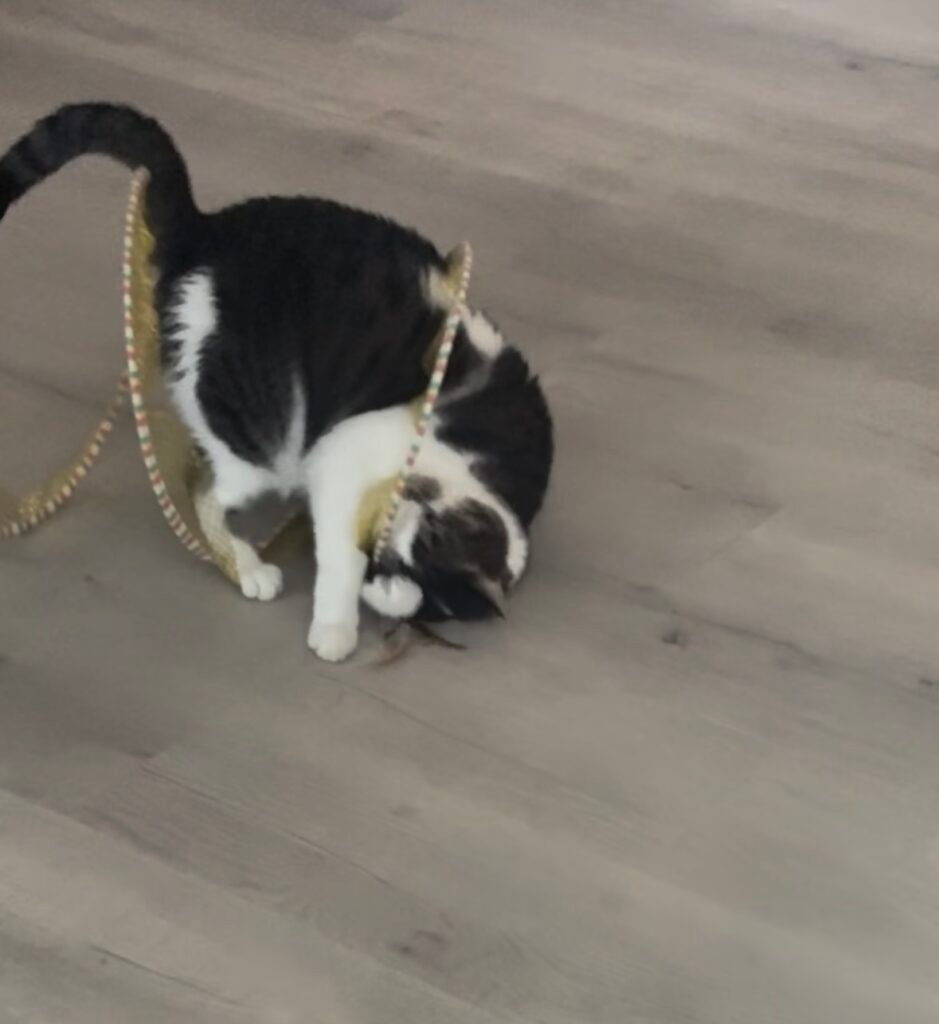
Looking for a wand toy to try?
This MeoHui Interactive Cat Wand Toy Set comes with two retractable wands plus feather attachments, giving you plenty of ways to switch up play and keep your cat interested. It’s a simple, budget-friendly option for interactive play sessions.
Affiliate Disclosure: This is an Amazon affiliate link. If you purchase through this link, The Cat Chronicles may earn a commission at no additional cost to you.
4. Introduce Food Puzzles
Cats don’t just need physical exercise. They need to use their brains, too.
Food puzzles and treat-dispensing toys make your cat work for part of their food rather than simply receiving it in a bowl.
Depending on the puzzle, your cat may need to:
- Bat at objects
- Move pieces
- Roll a toy
- Sniff out hidden food
- Figure out how to reach a treat
Start with something simple. If the puzzle is too difficult, your cat may decide the game isn’t worth playing.
And honestly, cats are pretty good at quitting when they disagree with your choice of entertainment. 😂
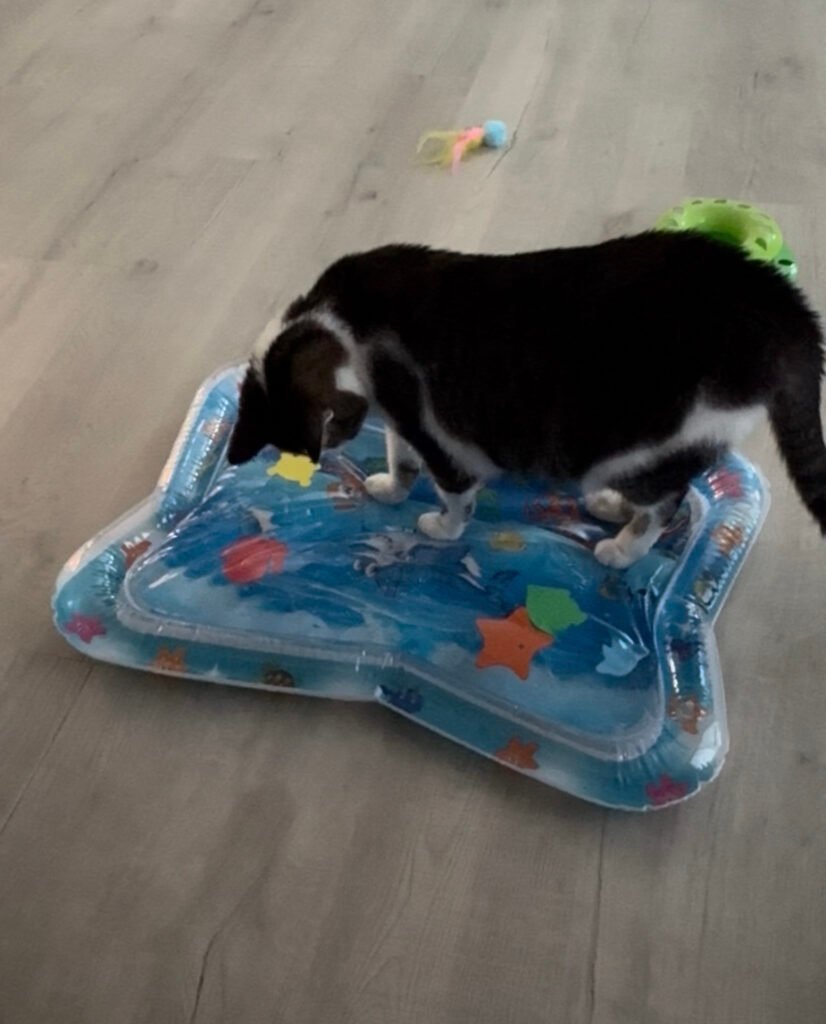
Looking for a food puzzle to try?
The Catstages Nina Ottosson Buggin’ Out Puzzle & Play Cat Toy gives cats a chance to work for treats while using their natural hunting and foraging instincts. It can be a fun way to add mental stimulation and make treat time more interesting.
Affiliate Disclosure: This is an Amazon affiliate link. If you purchase through this link, The Cat Chronicles may earn a commission at no additional cost to you.
5. Give Them a Cardboard Box
Never underestimate the humble cardboard box.
You can spend money on an elaborate cat playhouse, and your cat may still choose the box it came in.
Boxes provide places to hide, investigate, ambush unsuspecting family members, and take a nap.
You can make a simple little box fort by connecting several boxes or cutting openings into a sturdy box.
Just make sure there are no staples, loose tape, strings, or other hazards that your cat could chew or swallow.
Rebel’s Take
A box isn’t packaging.
It’s real estate.
6. Create a Window Watching Station
A window can be one of the best sources of free cat entertainment.
Birds, squirrels, insects, people walking by, falling leaves, and even changing weather can give your cat something interesting to watch.
A secure window perch can make the experience even better.
If possible, choose a window with a view of something moving outside.
For many cats, “Cat TV” is completely free.
Just make sure screens and windows are secure, particularly if your cat is an enthusiastic bird watcher.
7. Give Your Cat Vertical Space
Cats often enjoy being up high because it gives them a different perspective on their surroundings.
A cat tree, shelf, window perch, or other safe elevated space can give your indoor cat somewhere to climb, observe, and relax.
Vertical space can be especially valuable in homes with multiple cats because it gives them additional ways to create their own personal space.
You don’t necessarily need an enormous cat tree.
Even a few strategically placed, securely installed shelves can create another dimension to your cat’s environment.
8. Set Up a Cat Tunnel
Tunnels are great for cats who enjoy hiding, stalking, chasing, and exploring.
You can use a commercially made cat tunnel or make a temporary tunnel from sturdy cardboard boxes.
Try placing a favorite toy just outside the tunnel and moving it past the opening.
Your cat may decide they’ve just entered a highly sophisticated hunting expedition.
9. Hide Treats Around the House
Turn snack time into a treasure hunt.
Instead of giving your cat every treat in one location, hide small amounts in safe, accessible places around the house.
Start somewhere obvious and gradually make the hiding spots more challenging.
This encourages your cat to use their nose and natural searching behaviors.
If you’re using regular food rather than treats, you can even make part of your cat’s normal daily food allowance into a little scavenger hunt.
Just remember to account for those calories.
10. Teach Your Cat a Trick
Cats can learn much more than people sometimes give them credit for.
With positive reinforcement and patience, you can teach behaviors such as:
- Sitting
- Coming when called
- Touching your hand
- Going to a specific spot
- Entering a carrier
- Using a target
Keep training sessions short.
A few minutes at a time is plenty.
The goal isn’t to turn your cat into a circus performer. It’s to give them a chance to think, interact with you, and earn a reward.
11. Give Cat TV a Try
Not every cat cares about television.
Some cats, however, are fascinated by videos showing birds, fish, squirrels, or other moving animals.
You can experiment with nature videos designed for cats and see whether yours is interested.
If your cat becomes excited by the screen, make sure the television or monitor is secure enough that an enthusiastic paw can’t knock it over.
And don’t be surprised if your cat eventually tries to figure out where those birds went.
12. Make a DIY Puzzle
You don’t have to buy an expensive enrichment toy.
Safe household items can become simple puzzles.
For example, you can place treats inside a cardboard box with a few large openings and let your cat figure out how to reach them.
Cardboard tubes can also be used for simple treat puzzles, provided they’re appropriate for your cat and supervised.
The goal isn’t to make the puzzle difficult.
It’s to make your cat think:
“Hmm. How do I get that?”
That little bit of problem-solving is enrichment.
13. Give Them New Things to Smell
Cats experience much of their environment through scent, so introducing safe new smells can provide mental stimulation.
A paper bag from another room, a cardboard box, or an object that has been somewhere interesting can become something worth investigating.
You can also look into cat-safe herbs and plants, but always verify that anything you introduce is safe for cats.
And don’t assume that something is safe simply because it’s marketed as “natural.”
Natural doesn’t automatically mean cat-safe.
14. Turn Playtime Into a Hunt
Instead of bringing the toy directly to your cat every time, make your cat find it.
Move a toy into another room.
Hide it partially behind a piece of furniture.
Let your cat hear it before they see it.
Create little opportunities for stalking and searching.
This works particularly well when combined with interactive play.
You can think of it as creating a miniature hunting adventure without anyone having to leave the house.
15. Consider an Exercise Wheel
Some indoor cats have a LOT of energy.
For those cats, an appropriately designed cat exercise wheel can provide another way to get physical activity.
Exercise wheels aren’t necessary for every cat, and some cats will look at one as though you’ve completely lost your mind.
Others may take to them enthusiastically.
If you’re considering one, choose a wheel designed specifically for cats and introduce it gradually. Never force a cat onto it.
Rebel’s Wheel Adventure
This is one we’re going to have some fun with here at The Cat Chronicles.
Rebel has an exercise wheel on the way, so we’ll eventually be able to share what happens when she gets her own.
Will she jump on and become a tiny feline athlete?
Will she inspect it suspiciously and walk away?
Or will she decide it’s an extremely expensive place to sit?
Stay tuned. 😂
We’ll update this section with Rebel’s real-world experience once we’ve had a chance to see how she reacts.
How Much Entertainment Does an Indoor Cat Need?
There’s no magic number of minutes that every cat needs.
Cats have different personalities, ages, energy levels, and preferences.
Some cats are happy with several short play sessions throughout the day. Others want longer periods of activity. Kittens and young cats often need considerably more stimulation than older cats.
Rather than trying to keep your cat busy constantly, focus on giving them regular opportunities for activity and choice.
A good indoor environment might include:
- Opportunities for interactive play
- Places to climb
- Comfortable places to hide
- Something interesting to watch
- Toys that can be rotated
- Opportunities to explore and sniff
- Food puzzles or other mental challenges
- Time with you
The important thing is variety.
Signs Your Indoor Cat Might Be Bored
Cats don’t exactly fill out a customer satisfaction survey when they’re unhappy with their entertainment options.
Instead, boredom can sometimes show up as behavior changes.
Possible signs include:
- Excessive attention-seeking
- Increased vocalization
- Destructive behavior
- Knocking objects off surfaces
- Restlessness
- Excessive nighttime activity
- Chasing or attacking people
- Overgrooming
- Repeatedly engaging in the same unwanted behaviors
Of course, not every behavior problem is caused by boredom.
A sudden change in behavior can sometimes indicate stress, anxiety, or an underlying health problem. If your cat’s behavior changes suddenly or significantly, it’s a good idea to talk with your veterinarian.
You Don’t Have to Spend a Fortune
One of the best things about cat enrichment is that it doesn’t have to be expensive.
A cardboard box.
A paper bag.
A window.
A few minutes with a wand toy.
A treat hidden behind a box.
These simple things can provide plenty of stimulation.
Your cat doesn’t necessarily need a house full of expensive gadgets.
They need opportunities to explore, play, think, climb, hunt, and interact.
And sometimes, they just need you to put the phone down and play with them for ten minutes.
Final Thoughts
Keeping an indoor cat entertained isn’t about creating a never-ending amusement park.
It’s about creating a home where your cat has choices.
A place to climb.
Something interesting to watch.
A toy to chase.
A puzzle to solve.
A box to conquer.
And, of course, a human who is willing to participate in the occasional completely ridiculous game of chase the mysterious feather.
A little enrichment can go a long way toward helping an indoor cat stay active, curious, and engaged.
And if your cat ignores the expensive toy you bought and spends 45 minutes playing with the receipt?
Well…
Welcome to life with a cat. 😹
🐾 Continue the Adventure
Rebel has plenty more stories to tell…
Whether she’s following me from room to room, testing gravity one object at a time, or getting into a little harmless mischief, there’s always another adventure waiting.
Where will Rebel take you next?
🐱🏃 How Can I Exercise My Indoor Cat?
🏠🐾 What to Do If Your Indoor Cat Gets Outside
🤒How Do I Know If My Cat Is Sick?
🐾 Explore Cat Care
🐱 Explore Cat Behavior
📚 Explore Cat Health
📖 Explore Cat Stories
Want to Meet Rebel?
“If you’re wondering how Rebel became my tiny shadow in the first place…”