What to Do If Your Indoor Cat Gets Outside
For an indoor cat, the great outdoors can be a very confusing place.
The door opens.
Your cat slips through.
And suddenly your heart is pounding because the little creature who has spent her entire life safely inside is somewhere outside—and you have no idea where she went.
If this ever happens to you, try not to panic.
I know. Easier said than done.
But knowing what to do ahead of time can make those first few minutes much more productive.
And the first thing to remember is this:
Your indoor cat may be much closer than you think.
Don’t Assume Your Cat Has Gone Far
An indoor cat who accidentally gets outside may become frightened and disoriented.
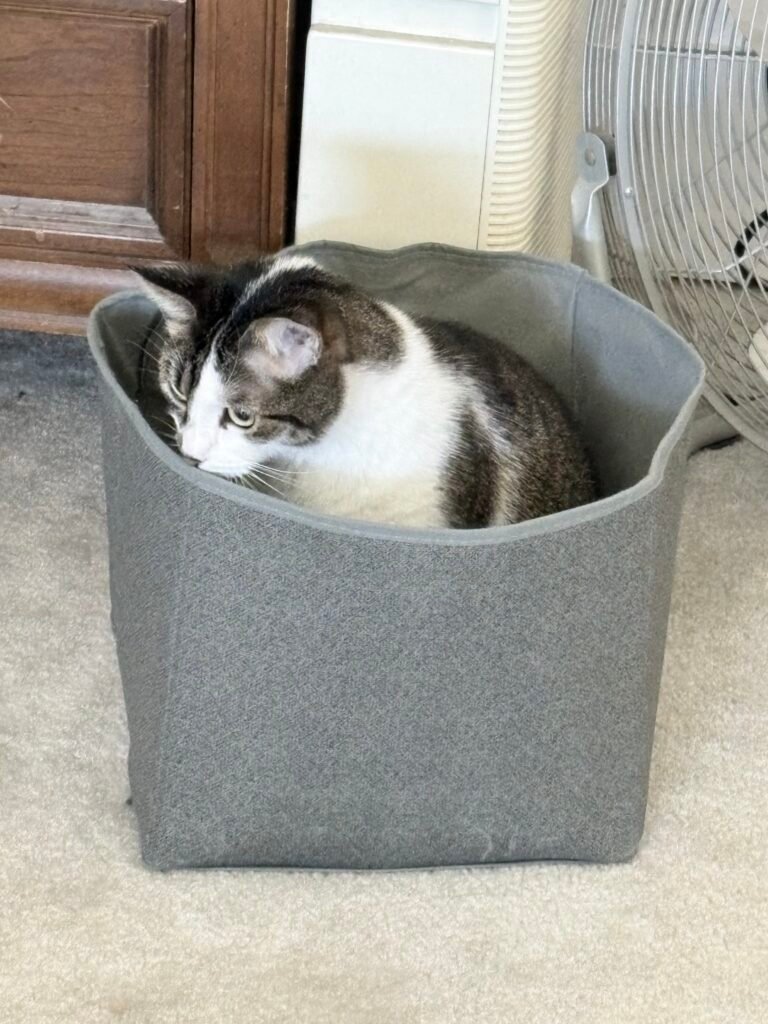
Instead of confidently exploring the neighborhood, she may find the nearest dark, quiet hiding place and stay there.
That means your first instinct—to run around the neighborhood calling her name—may not be the most effective first step.
Start close to home.
Look under cars, bushes, porches, decks, stairs, sheds, and other sheltered areas.
Ask your neighbors to check garages, sheds, and other places where a frightened cat could accidentally become trapped.
The ASPCA recommends searching the immediate area and asking neighbors to check places such as garages and sheds.
First, Make Sure She Didn’t Come Back Inside
This may sound obvious.
It isn’t.
Cats are remarkably good at hiding.
Before you start searching the neighborhood, search your home again.
Check:
- Under beds
- Behind furniture
- Inside closets
- Behind appliances
- Inside cabinets
- Under blankets
- In boxes
- Behind doors
- In bathrooms
- In garages
- Any small, dark, quiet place your cat could possibly squeeze into
Call her name.
Shake her treat container.
Open a can of her favorite food.
Listen carefully.
The ASPCA recommends searching the home thoroughly and using familiar sounds such as a food dish, treat jar, or favorite toy to encourage a hiding pet to come out.
And don’t assume that because you already looked somewhere once, your cat isn’t there.
She may have moved.
Or she may have been so frightened that she didn’t respond when you called.
Start Searching Close to Home
If you are sure your cat got outside, begin your search very close to the point where she escaped.
Walk slowly.
Look carefully.
Call her name in a calm voice.
Then stop and listen.
You may not hear a meow. A frightened cat may remain completely silent.
Look underneath things rather than just looking around.
Check:
- Under parked cars
- Under porches
- Beneath decks
- Behind bushes
- Around sheds
- Under stairs
- Inside open garages
- Around fences
- In crawl spaces
- Behind outdoor furniture
Bring a flashlight, even during the day. A flashlight can help you spot the reflection of a cat’s eyes in dark hiding places.
Ask Your Neighbors for Help
This is one of those situations where it’s okay to knock on doors.
Tell your immediate neighbors that your indoor cat has gotten out and ask them to check their property.
Ask them specifically to look inside garages and sheds before closing them.
Give them a photo of your cat if you have one.
And ask them to contact you if they see her—even if they’re not sure.
A neighbor who says, “I think I might have seen a cat that looks like yours under my deck,” is much more useful than someone who decides, “It probably wasn’t her.”
Use Familiar Things to Encourage Her to Come Out
Your cat knows your voice.
She knows the sound of her food.
She may recognize the sound of her favorite treat container.
Use those familiar things during your search.
But don’t assume that calling louder will make her come running.
A frightened cat may be too scared to respond.
Instead, try calling softly and then waiting quietly.
Give her time to listen.
Sometimes the best search technique isn’t more noise.
It’s less.
Consider Using Food
If you have a good idea where your cat may be hiding, food can help encourage her to come out.
Something especially smelly may be more noticeable than ordinary dry food.
You can place food near a safe location and monitor the area.
If you have a motion-activated camera, this can be particularly helpful because you can find out whether your cat is actually visiting the food without having to sit outside watching it all night.
The ASPCA has described cases where owners used food and cameras to help determine when a missing cat was returning to a particular location.
A Motion-Activated Camera Can Be Your Extra Set of Eyes
If your cat is hiding nearby, you may have no idea when she comes out.
A motion-activated camera can change that.
Place one near a likely hiding area or wherever you’re putting food.
Then you can find out:
Is she coming back?
What time is she coming back?
Is another animal eating the food?
Those answers can help you decide what to do next.
You don’t necessarily need an expensive camera specifically marketed for lost pets. A suitable motion-activated camera you already own may work.
Don’t Chase a Frightened Cat
This one can be difficult.
You finally spot your cat.
Your heart leaps.
You run toward her.
She runs away.
Now she’s farther from home.
A frightened cat may not behave like the cat who happily comes running when you open a can of food in the kitchen.
If you see her, try to stay calm.
Get low if you can.
Speak quietly.
Avoid sudden movements.
If she is frightened, give her time to approach rather than immediately trying to grab her.
If she is injured or trapped, the situation may require a different approach, and you may need help from your veterinarian, animal control, or an experienced rescue organization.
What If She Won’t Come Out?
Sometimes you know where your cat is, but she refuses to leave her hiding place.
This is where patience becomes extremely important.
Continue monitoring the area.
Keep food and water available when appropriate.
Use a camera if you have one.
And if you eventually need to use a humane trap, learn how to use it properly and monitor it closely.
A trap should never be treated as a set-it-and-forget-it solution.
If you’re unsure how to proceed, contact a local animal shelter, rescue organization, or experienced lost-pet volunteer for guidance.
Get the Word Out
If your cat isn’t home after your initial search, don’t wait days before telling people.
Contact:
- Local animal shelters
- Animal control
- Veterinary hospitals
- Rescue organizations
- Local lost-pet groups
- Neighborhood social media groups
The ASPCA recommends contacting shelters, animal control agencies, veterinary hospitals, and rescue groups when a pet goes missing.
And keep checking.
A missing cat may be found by someone who doesn’t know you’re looking for her.
Make a Lost Cat Flyer
A good lost-pet flyer doesn’t have to be fancy.
It needs to be easy to read.
Include:
MISSING CAT
A clear, recent photograph
Your cat’s name
Color and markings
Sex
Approximate age
Where and when she was last seen
A phone number where you can be reached
Any distinctive features
Don’t overload the flyer with information.
Someone driving past should be able to understand the most important details in a few seconds.
The ASPCA recommends using a clear photo and including identifying information and contact numbers on lost-pet flyers.
Check Shelters and Veterinary Hospitals
Even if your cat is microchipped, don’t assume someone will automatically contact you immediately.
A shelter or veterinary hospital may have your cat, or someone may have reported finding her.
Call local shelters, animal control agencies, veterinary hospitals, and rescue groups.
Provide a photo and your contact information.
And keep checking back.
The ASPCA recommends contacting these organizations as soon as a pet goes missing rather than waiting.
Make Sure Her Microchip Information Is Current
This is where our other article comes in.
A microchip can help identify your cat if someone finds her, but it can’t tell you where she is.
Before an emergency happens, make sure:
- Your cat’s microchip is registered.
- Your phone number is current.
- Your email address is current.
- Your address is current if required by the registry.
- Your emergency contact information is current.
If you haven’t checked your cat’s microchip information recently, this is a good time to do it.
Read more: I Thought My Cat’s Microchip Could Find Her. I Was Wrong.
What About a GPS Tracker?
A GPS tracker is different from a microchip.
A microchip identifies your cat.
A GPS tracker can help you locate her.
If your cat is an escape artist or you live in an area where getting outside is particularly easy, a cat-appropriate GPS tracker may be something worth considering.
Look for a device that is:
- Lightweight
- Appropriate for cats
- Comfortable
- Secure
- Compatible with a cat-safe breakaway collar when possible
- Practical for your area
- Within your budget
A GPS tracker isn’t a replacement for a microchip.
They’re two different layers of protection.
Prevention Is Easier Than Searching
Of course, the best time to prepare for an escaped indoor cat is before the door opens.
Try to identify the situations where your cat might slip outside.
Visitors coming through the door?
A delivery?
Someone carrying groceries?
A repair person coming into the house?
Construction or maintenance?
A storm?
A house full of people?
These situations can make an otherwise careful household a little less careful.
The ASPCA recommends being mindful when opening outside doors and keeping identification current, even for indoor pets.
You can also make a simple household rule:
Before opening an exterior door, know where the cat is.
It sounds almost too simple.
But simple works.
Create a Lost-Cat Plan Before You Need One
You don’t need a giant emergency binder.
Just have the basics ready.
Keep a recent photo of your cat on your phone.
Know your local shelter and animal control contact information.
Keep your veterinarian’s number handy.
Know which local lost-pet groups serve your neighborhood.
Make sure your cat’s microchip information is current.
And if you decide to use a GPS tracker or motion-activated camera, know how the equipment works before you’re trying to figure it out while panicking.
Because believe me, panic is not the ideal time to read the instruction manual.
If Your Indoor Cat Gets Outside, Remember This
The most important thing is to start searching immediately, but don’t assume the worst.
Your cat may be hiding very close to home.
Search carefully.
Search quietly.
Ask neighbors for help.
Check garages and sheds.
Use familiar sounds and smells.
Consider a camera.
Contact shelters and veterinary facilities.
Spread the word.
And keep looking.
In a 2012 ASPCA survey, 74% of lost cats were ultimately recovered, with many cat guardians reporting that their cats returned home on their own or were found through neighborhood searching.
There may be moments when you’re convinced your cat has disappeared forever.
Try not to let that fear make the decisions for you.
Take a breath.
Make a plan.
Start close.
And keep going.
🐾 Rebel’s Take
“First of all, I would like to clarify that I have never intentionally gone outside. I simply believe that doors should be inspected whenever they open.”
“Second, if I ever do sneak outside, please don’t chase me. I have excellent hiding skills and absolutely no intention of making this easy for you.”
— Rebel, indoor cat and occasional escape-route inspector
One Last Thing
Having an indoor cat doesn’t mean you’ll never have to worry about her getting outside.
Doors open.
Screens get loose.
Visitors forget.
Cats are curious.
Accidents happen.
But having a plan can turn a terrifying moment into a series of things you know how to do.
And if there’s one thing I learned from my own experience with Rebel, it’s this:
You don’t want to figure out your lost-cat plan while you’re standing in the middle of the house wondering where your cat went.
Prepare now.
Hopefully, you’ll never need the plan.
But if you do, you’ll be glad you have it.
🐾 And maybe your cat will come strolling back into the kitchen five hours later, look at you like you’re being ridiculous, and ask what’s for dinner.
🐾 Continue the Adventure
Rebel has plenty more stories to tell…
Whether she’s following me from room to room, testing gravity one object at a time, or getting into a little harmless mischief, there’s always another adventure waiting.
Where will Rebel take you next?
🐾I Thought My Cat’s Microchip Could Find Her. I Was Wrong.
🤒How Do I Know If My Cat Is Sick?
📚 Explore Cat Care
📚 Explore Cat Health
🐱 Explore Cat Behavior
📖 Explore Cat Stories
Want to Meet Rebel?
“If you’re wondering how Rebel became my tiny shadow in the first place…”